
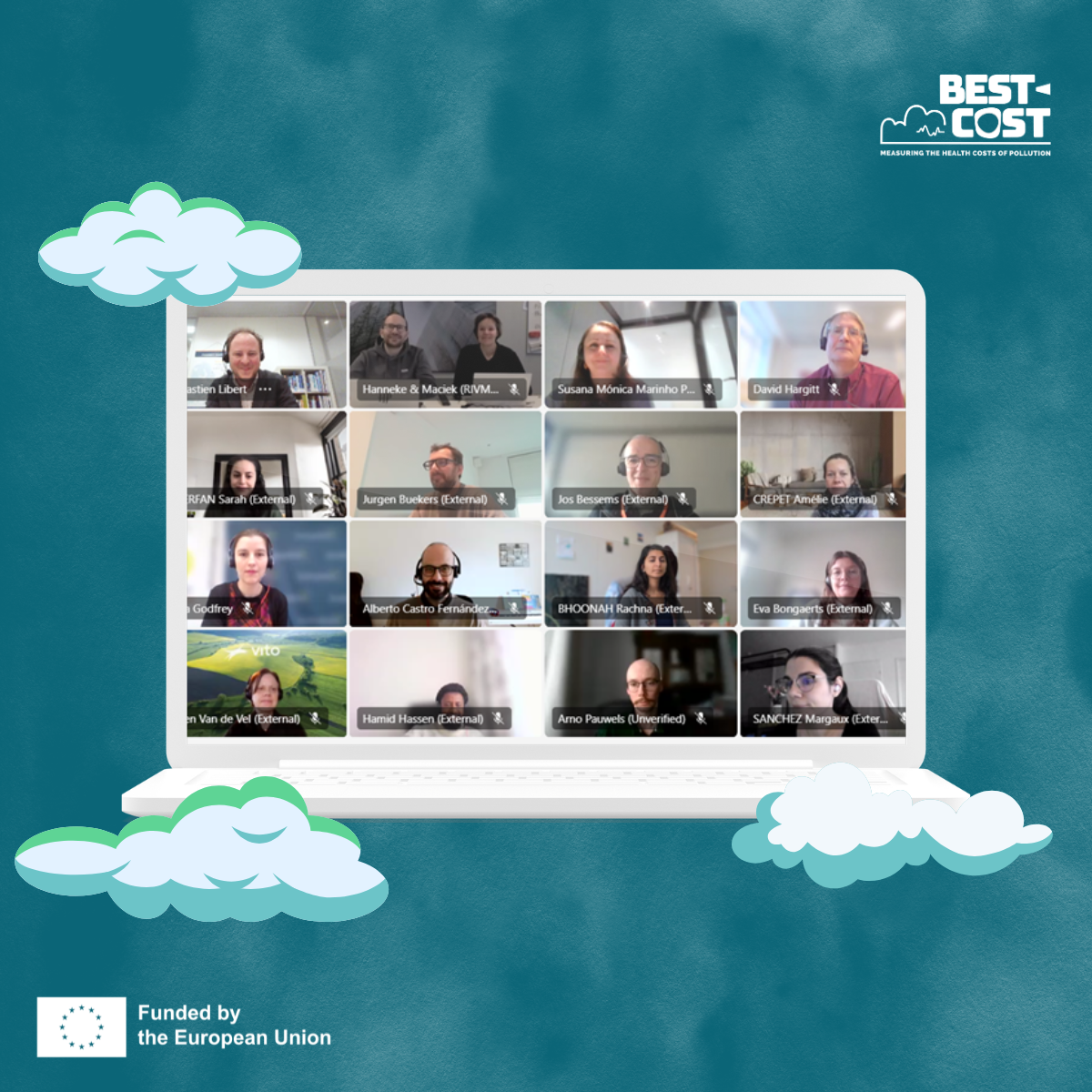
As the BEST-COST project enters its final year, our researchers are looking into how to scale up its research methods to be more widely used in examining environmental health impacts. To help us gain a fuller, more in-depth understanding of the health costs of pollution, we need to improve research methods for all pollutants threatening our health. That way, science can guide policymakers to design more holistic policy action in tackling health inequities connected to our environment.
BEST-COST invited scientific researchers across various environmental health topics to take part in its “ideathon”, an online workshop to explore ways the BEST-COST environmental burden of disease (EBoD) methodology and tools can be transferred to other environmental stressors beyond air and noise pollution, and to health-promoting factors. The topics included:
- Chemicals
- Ultra-fine particles
- Green spaces
- Heat and extreme temperatures
Participants explored the challenges faced when applying new research methodologies to different stressors. The points raised included access to data as well as ways to close different data gaps, for example by working with already existing data on certain pollutants or diseases linked to environmental stressors. Participants highlighted that policymakers can work with data already available, rather than waiting for the full picture, to take more urgent action in the face of pressing environmental challenges. Framing plays a central role when describing how scientific evidence can translate into policy, with participants commenting on the importance of economic outcomes as well as health. In line with this, resilience and competitiveness are key terms within broader conversations on the different factors shaping our environmental health.
The discussions from the ideathon will feed into BEST-COST policy recommendations to guide policymakers in implementing effective environmental policy that considers health impacts. For more information on BEST-COST’s transferability work, please contact jurgen.buekers@vito.be or jos.bessems@vito.be


